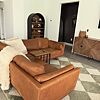
Adding leather furniture to your home or apartment is a solid choice for many reasons. Not the least of which is it’s such a versatile and timeless material that will go with almost any home interior or lifestyle.
We’ve put together the following guide to help you learn more about the different leather types, its care, buying tips, and more. So, whether you’re buying leather furnishings for the first time or adding to what you’ve purchased before, read on to get all the major details to guide your decision.
Key Takeaways From this Guide
- Why leather furniture is worth the investment.
- Leather comes in different types and finishes.
- Sofas made from leather hold up to everyday living.
- Options include full-size sofas, sectionals, sofa beds, and accent chairs.
- Leather isn’t hard to take care of but needs a proper care regimen.
- Standard, neutral-colored leather upholstery can be customized.
- The longevity of leather keeps it out of landfills longer, making it sustainable
- The decision tree that helps you match the right piece to your needs.
Why Leather Furniture is Worth the Investment
You might be disheartened at first by the price you see online for leather furniture. Upon closer look, however, you’ll see that the many benefits leather furniture brings makes it definitely worth what you pay. For starters, it easily beats out other fabrics in terms of longevity. That, and these other powerful benefits below 1 might convince you that the leather couch you’ve been eyeing is in your future.
Built to Get Better
Quality leather develops a patina over time. On full-grain leather, this natural process softens the surface and adds depth of color—while scratches and scuffs become part of its character. Instead of wearing out, it develops a look that reflects the life of the home it’s in. This process is most noticeable on high-quality, unprotected leathers like full-grain or pure aniline-dyed leather, where the natural surface is exposed to wear and sunlight. So, much like a fine wine, leather only improves with age, one of the main reasons people choose it over other materials.
Easier Maintenance
You may have heard that leather requires a lot of trouble to keep it looking and feeling nice, but that’s a falsehood. Usually, all it needs is occasional conditioning and wiping down (more on that later). While maintenance for many finished leathers is easier than for fabric, certain types like pure aniline leather require immediate attention to spills to prevent staining. Compare that to fabric, which often needs frequent deep cleaning.
Never Goes Out of Style
Leather’s long history gives it a timeless quality, making it at home whether you’re adding to a modern or contemporary designed interior. That adaptability means it never feels out of style, no matter how frequently styles come and go. Likewise, it means it will pair easily with other home accents like coffee and side tables.
Money Savings Over Time
The durability of quality leather is one of leather’s greatest strengths. Well-made is worth it, and quality leather resists wear and stretching in ways that woven fibers can’t. When you factor in proper care and maintenance alongside this, leather pieces can last decades.
What are the Main Leather Types?
Let's explore the main leather grades and finishes below, along with pigment processes like pure and semi-aniline dyes:

Full-grain
A leather that keeps the top layer of hide intact from cattle, sheep, and goats. The process retains its natural grain and markings. Considered the gold standard, it’s durable and breathable. It also develops that highly-valued patina over time.

Top-grain
Top-grain leather is made by sanding or buffing away the top layer of the hide to remove imperfections, and then an artificial grain pattern is stamped onto the surface or alternatively sanded for smoothness. This process makes it more uniform and stain-resistant than full-grain leather, but it also removes the natural grain and breathability. It's often used for a more consistent look and can be more affordable.

Bonded
Made by mixing leather fibers with polyurethane or rubber, this option is embossed to mimic a natural grain. It doesn’t hold up as well as higher grades but offers a sleek look with a more affordable price tag.

Pure Aniline Dyed
This process uses a translucent, water-based tint that highlights natural scratches, scars, and other blemishes or it’s many times a synthetic solution that penetrates the leather without blemish. It gives the animal hide depth and dimension. Without a protective topcoat, the leather stays soft and breathable for a super comfortable sit, gradually developing a warm, vintage patina. It is light- and sun-sensitive, so it needs extra care. This type of dye is commonly applied to full-grain leather to preserve natural beauty.

Semi-Aniline Dyed
Uses the same translucent tint as pure to keep the hide’s natural markings visible. A light pigmented topcoat is added for more even color and better protection. The finish makes it easier to clean, more resistant to sunlight and wear. The trade-off is a slightly waxier feel and a patina that develops with less variation. This finish can be applied to full or top-grain leather.
Leather vs. Fabric Which is More Durable ?
The strength of leather makes it stand apart and hold up to all the messes that happen during family life or friendly get-togethers. High quality leather furniture is there for it all—whether it’s pets getting up on the cushions or messy chicken wings dropped on the sofa arms during Super Bowl Sunday .
Still deciding? Check out Couch Wars: Leather vs. Fabric for a side-by-side look.
Leather Sofas and Chairs Are Available
Leather seating comes in several forms, including full-size sofas, sectionals, sofa beds, and accent chairs. Here’s a closer look at each style and the possibilities they bring to different spaces.
Full Size
A full-size leather sofa defines and elevates a living room layout, offering both comfort and a topic of conversation when guests gather. These three-seater sofas typically measure between 72 and 96 inches long. That’s enough to comfortably provide ample seating for families, couples, or anyone who wants to make the most of their space.
Sectionals
For larger households or open-concept spaces, a leather sectional brightens up the home while providing the flexibility you need to build out your floorplan. Upholstered in top-grain leather, these pieces bring durability and warmth to family rooms—while still feeling polished. Layouts come in right-facing, left-facing, and corner options, so you can choose what best suits your living room.
Sofa Beds
Leather sofa beds function as a couch with supportive seating during the day and then pull out into a cozy space for families and guests at night. Because they work double duty, they’re especially practical in apartments or multipurpose rooms where space is limited. Along with saving space, they add a polished look that blends easily into your décor.
Accent Chairs
To complete the room, leather accent chairs provide a pop of sophistication. They can stand alone in a reading nook or complement a larger sofa. Choose from club chairs, sling chairs, or armchairs depending on the tone you want.
How Do You Care for Leather Furniture?
While leather furniture doesn’t need the constant upkeep that fabric does, it does need simple cleaning and occasional conditioning.
Spot & Stain Removal
For minor scuffs, gently buff the area with a soft, clean cloth. For a deeper clean, use a soft, damp cloth with a small amount of distilled water.
Pro tip: It’s important to use soft cleaning cloths that won’t scratch, damage or remove the coloring of your leather. Cleaning cloths made of natural chamois. Be sure to test a new cleaning product on an unseen or inconspicuous area first before applying totally.
Care & Maintenance
To prevent over-drying of Poly & Bark’s leather pieces do not use other conditioning products such as Otter Wax Saddle Soap, or any leather wipes. These may cause the naturally porous hides to dry out, leading to irreversible damage. Only pure or natural oils should be used. If you are unsure, test on an inconspicuous area of your item.
Expert Tips & Tricks
Use the following to tips & tricks to supplement your leather care efforts:
- Always test cleaning products on a non-visible area first.
- Avoid placing leather in direct sunlight or near heat as it will fade faster.
- Avoid applying heat to all leather types if it gets wet because it could lead to cracking.
- Always let full-grain leather air dry at room temperature.
Poly & Bark provides a full leather care guide with more details, plus more expert cleaning tips.
Color and Patina to Elevate Your Interior
If you want to go beyond the standard neutrals leather comes in, customization through color is your best shot. Poly & Bark offers shades that range from chocolate brown and buttery cognac tan to dramatic nightfall blue. These dyed leathers also age over the years, with the patina giving pieces even more defining character.
Take the Capa Sofa, for instance. For color variety options to match the interior of your home, you can select chocolate brown, saddle tan, or semi-aniline dyed leathers. What’s more, the larger Capa collection includes ottomans and reversible corner sectional sofas that share the same upholstery choices as the full sofa itself. You wind up with a cohesive look throughout your room.
Is Leather Furniture Sustainable?
Sustainability matters when choosing furniture meant to last for decades. Durable, responsibly sourced leather reduces landfill waste and avoids the constant replacement cycle of cheaper pieces. A single well-made sofa creates less waste over time.
How Do You Choose the Right Leather Furniture for Your Home?
Finding the right leather furniture for your space depends on measurements, decor style, and use. Are you in an apartment and needing a smaller piece? Is your decor more traditional or modern? And are you single or have a growing family? All these factors are things to consider.
If you need help, contact one of our experts today.
Ready to discover your dream leather furniture? Check out what’s new at Poly & Bark today.